
What I've learned about transformation design thus far #47
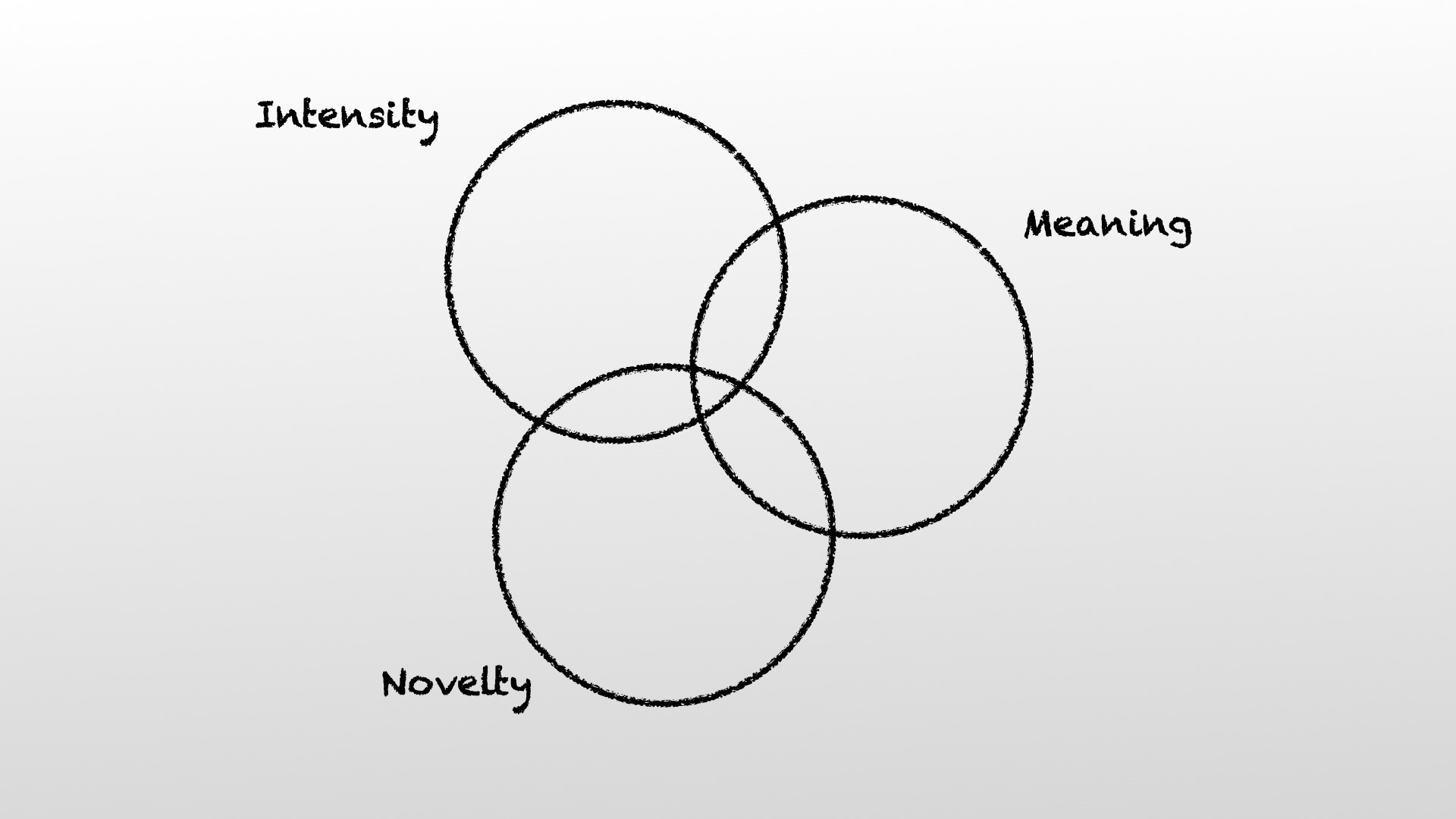
Neuroscience adds another lens to memorable and transformative experiences. The brain encodes experiences into memory based on several factors, three of which are particularly relevant: intensity, novelty, and meaning.
Intensity creates stronger memory traces. The amygdala, responding to emotional arousal, signals the hippocampus to pay attention, to encode more carefully, to consolidate more durably. This is why we remember emotional experiences more vividly than neutral ones; they were written into memory more deeply.
Novelty activates the brain’s learning systems. The dopaminergic pathways that respond to the unexpected, the new, the surprising, these flag experience as worth attending to. The familiar can be processed automatically; the novel demands engagement. And what demands engagement gets remembered.
Meaning determines whether an experience is connected to self-relevant frameworks. The memory that connects to who I am, what I care about, and what matters in my life; this memory is integrated into the structure of self. It does not float isolated but is woven into the web of significance that organises identity.