
What I've learned about transformation design thus far #39
Psychologists define awe as the experience of something vast that exceeds current frames of understanding. The vast can be perceptual: a mountain, an ocean, a star-filled sky. It can be conceptual: an idea that reframes everything, a piece of music that seems to come from beyond. It can be social: a crowd moving as one, a collective moment that transcends individual experience.
What makes awe transformative is its capacity to dissolve self-focus. Research by Dacher Keltner and colleagues has shown that awe reduces activity in brain regions associated with self-referential thinking, a reduction also seen in meditation and psychedelic states. Awe makes the self feel small, not in a diminishing way but in a liberating one. The small self opens onto a larger whole.
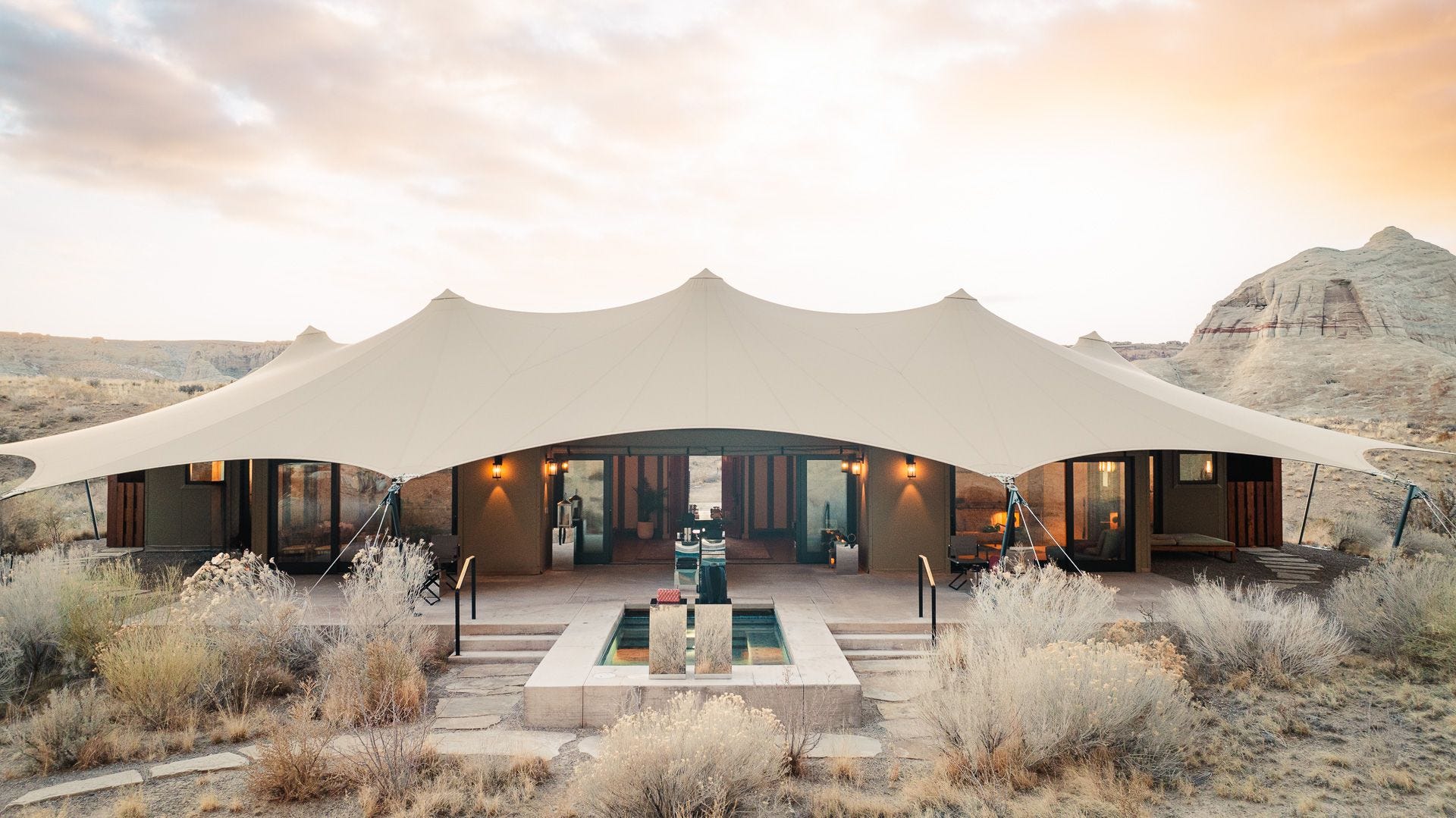
This has immediate applications for design. Environments that inspire awe, through scale, beauty, mystery, or presence, create conditions for transcendence. The cathedral’s height, the temple’s geometry, and the view from the mountain are not decorative. They are functional, serving the purpose of ego dissolution.